


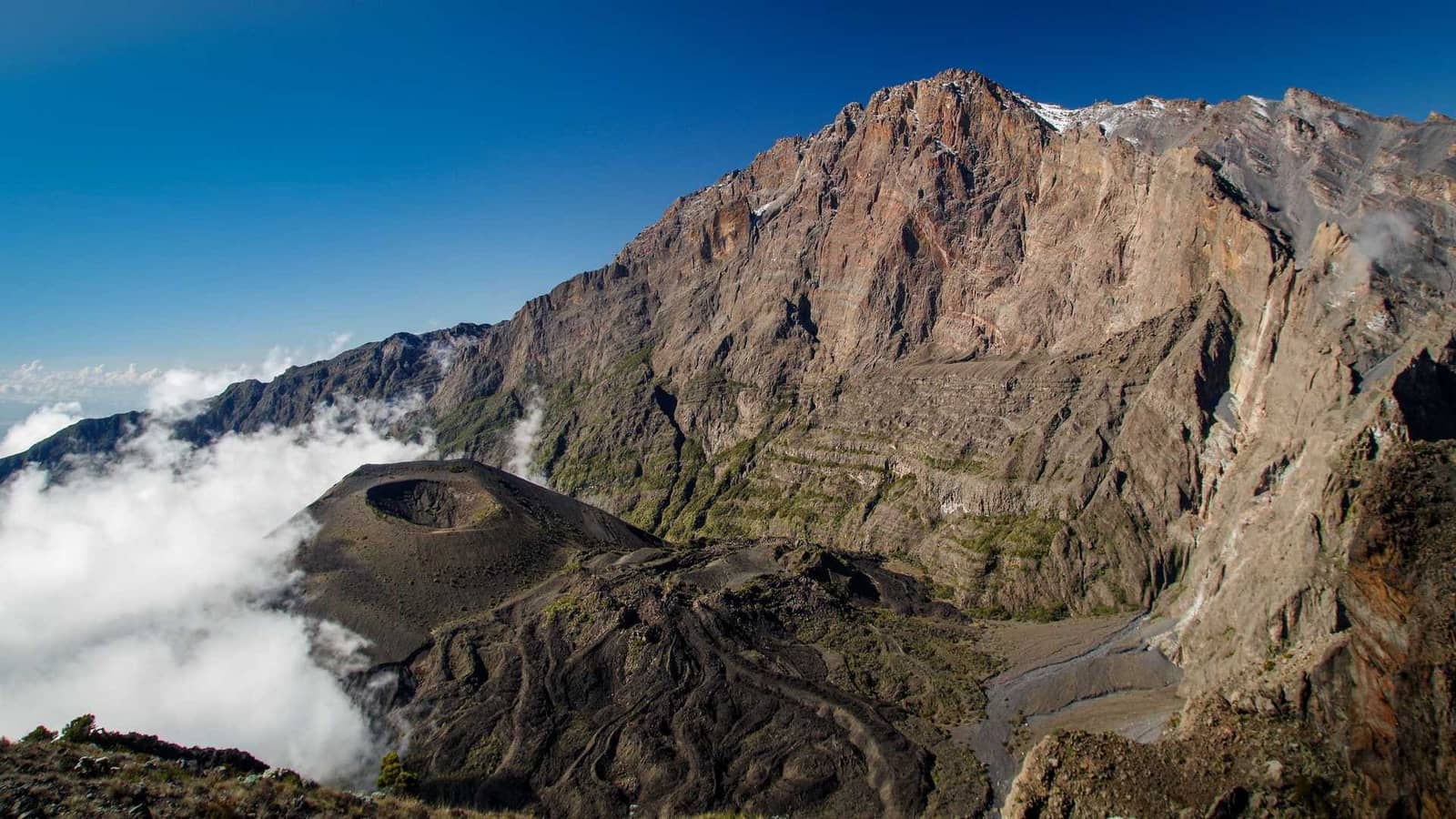
Mount Meru rising above Arusha National Park

Mount Meru · 4,566 m

Mt. Meru Climbing

Nestled within the lush landscapes of northern Tanzania, Mount Meru stands as one of Africa's great trekking experiences. Towering at 4,566 meters (14,980 feet), it is the second-highest free-standing mountain in Tanzania and a dramatic stratovolcano with a caldera, rugged peaks, rich forests, and ever-changing vistas.

Overview

A stratovolcano, a national park, a summit

Nestled within the lush landscapes of northern Tanzania, Mount Meru stands as one of Africa's great trekking experiences. Towering at 4,566 meters (14,980 feet), it is the second-highest free-standing mountain in Tanzania and a dramatic stratovolcano with a caldera, rugged peaks, rich forests, and ever-changing vistas.

Whether you choose a three-day or four-day trekking package with Western Bridge Africa, you receive the same excellent benefits: wildlife encounters, comfortable lodging, expert guidance, and an unforgettable journey into the magic of Mount Meru and Arusha National Park.

The mountain

Details of Mount Meru

Details of Mount Meru

Mount Meru is the first sight you can see when reaching Arusha town.

The mountain is with its 4,566 m (14,990 feet) Tanzania's second highest peak after Kilimanjaro and the fifth highest in Africa. The mountain has two peaks: Meru Summit, the highest point, and Ash Cone, an additional peak inside the crater which was formed after a more recent volcanic activity. On clear days one can see Great Rift Valley and Kitumbeini and Gelai volcanoes in the western part, and in the east its neighbor Mount Kilimanjaro with Kibo and Shira Plateau.
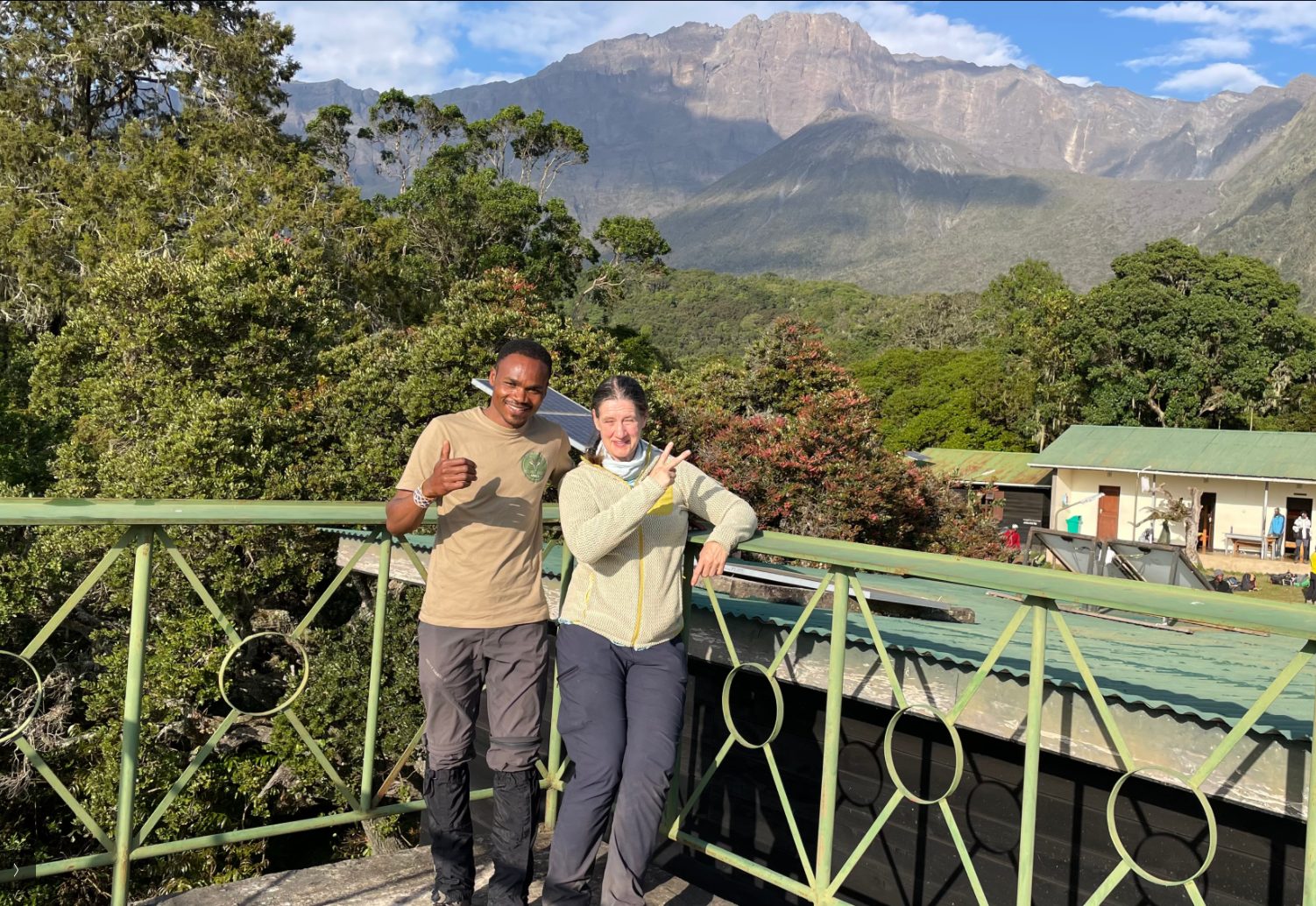
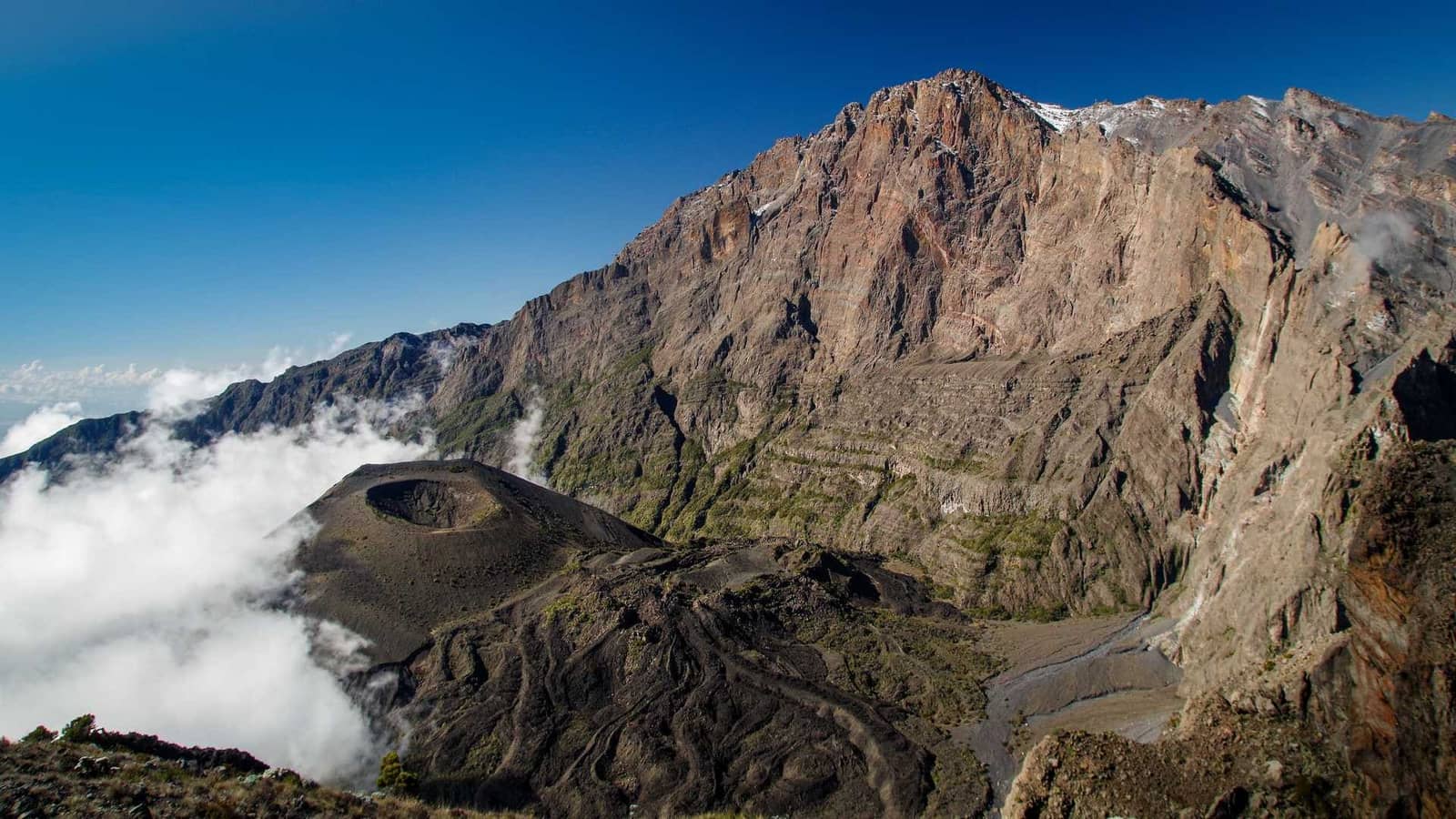
The peak can be ascended in 3 or 4 days on the Momela Route

It is the only way up to the summit. You don't need any technical equipment for the climb but you will need to be prepared for the altitude gain. The best thing you can do is to take your time for proper acclimatisation.

Spectacular views

The climb offers spectacular views of Mount Kilimanjaro and wildlife on the forested slopes and the summit itself offers an amazing view of small cones and craters, which are probably the results of numerous volcanic activities in the past.

The climb to Mount Meru is a rewarding experience

You first pass through a savannah where you have the possibility to spot buffaloes and giraffes. At the lower slopes of Mount Meru you can find parkland, grassland and a rainforest with red-hot pokers and Spanish moss. The giant heather zone and the moorlands are forested by giant lobelias. Close to the summit you can spot everlasting flowers in this alpine desert. The way up to the summit is through a narrow and barren ridge. At the summit you can have amazing views of the Ash Cone inside the crater. While the best choice to explore Mount Meru is by climbing it up to Meru Summit, you can also spend your time at the mountain and its surrounding with different activities such as a walking safari in the national park, canoeing in the Small Momella Lake, bird watching or even game-viewing.

The wildlife and the birds of this area are amazing

The most prominent among the 400 different bird species on Mount Meru are lanner falcon, Levaillant's cuckoo and crowned eagle. The animals you can see around the mountain are giraffes, white colobus monkey, buffaloes, elephants, baboons and flamingos around the Momella lakes.

The formation of Mount Meru

It happened after the formation of Great Rift Valley, when million years ago the volcano standing on this area lost its top after a gigantic explosion. This explosion gave Mount Meru its shape of a horseshoe. Mount Meru is still an active volcano with the last smaller eruption in 1910. The first person to climb Mount Meru up to the peak was Dr. Fitz Jaeger in 1904. The local Waarusha people who leave around Mount Meru regard it a sacred place. They sacrifice a bull or sheep every year to the mountain for a rainy season. Mount Meru offers two huts for overnight stays, Miriakamba and Saddle hut. Additionally the Arusha National Park has three campsites, a rest-house and few lodges.

Why climb

Why people trek Mount Meru

  • 1

    Wildlife on foot from day one

    The walk-in from Momella Gate crosses open meadows in Arusha National Park where buffalo, giraffe, warthog, bushbuck and occasionally elephant are routine sightings, escorted by an armed park ranger.

  • 2

    A serious summit without technical climbing

    No ropes, no ice axe, but a knife-edge final ridge to Socialist Peak with steep drops on either side. Endurance, head for heights and acclimatisation all matter.

  • 3

    The best Kilimanjaro warm-up in Tanzania

    Climb Meru first, rest three days, then start Kilimanjaro. Guests who do this consistently report an easier acclimatisation on Kilimanjaro summit night.

  • 4

    Uncrowded trails

    Meru sees a small fraction of Kilimanjaro's traffic. On many nights you share Miriakamba or Saddle Hut with only a handful of other climbers.

What to expect

On the Momela Route, day by day

Day 1: Momella Gate to Miriakamba Hut

A gentle three to four hour walk-in across grassland and cloud forest, escorted by an armed ranger. Wildlife sightings on this stretch are the rule, not the exception. Overnight at Miriakamba Hut, 2,514 m.

Day 2: Miriakamba to Saddle Hut

A steep climb through cloud forest, giant heather and moorland to Saddle Hut at 3,570 m. Afternoon acclimatisation walk to the summit of Little Meru, 3,820 m, for views of the main summit cone and Kilimanjaro to the east.

Summit night: Saddle Hut to Socialist Peak

A midnight start along the crater rim, headtorches, cold and quiet. The final ridge to Socialist Peak, 4,566 m, is narrow with steep drops on both sides. Sunrise from the summit over Kilimanjaro is one of the great sights in East Africa.

Descent

Long descent back to Miriakamba for lunch and either onward to Momella Gate the same day or an extra night at Miriakamba on the four-day itinerary.

Health and safety

Acclimatisation, rangers, and turnaround calls

Mount Meru is a serious climb. The final ridge to Socialist Peak is narrow with real exposure, and the altitude gain from Momella Gate to the summit in three days is significant. Our itineraries are built around slow, deliberate ascent, active health monitoring and a firm turnaround policy.

You will not be pushed. If your guide decides you should descend, you descend. That call has kept every one of our climbers safe on this mountain.

  • Every climb is escorted by an armed Arusha National Park ranger, not just for wildlife but for route safety on the crater rim.
  • Slow, deliberate pace with regular hydration and monitoring for altitude symptoms.
  • Pulse oximeter checks morning and evening at Miriakamba and Saddle huts.
  • Emergency oxygen and a comprehensive first-aid kit carried on every climb.
  • Turnaround call rests with the guide. If your guide asks you to descend, you descend.
  • Four-day itinerary preferred for guests who have not been above 3,500 m in the last three months.
Best time

Best time to climb Mount Meru

Mount Meru is climbed year round, but the two main climbing seasons are the dry months from June to October and from December to February. During these periods the summit ridge is dry, views across to Kilimanjaro are at their clearest, and the wildlife on the walk-in through Arusha National Park concentrates around the Momella lakes.

The long rains fall roughly from mid March to the end of May, and a shorter rainy period sits in November. The trail remains open, but the crater rim can be slippery and views are often limited. Some experienced climbers prefer these quieter months for the empty huts and dramatic cloud.

Why climb with us

Why climb Mount Meru with Western Bridge Africa

  • Owned and operated in Arusha at the foot of Mount Meru itself, our guides climb this mountain year round.
  • KPAP-registered crews and fair porter wages on every climb.
  • Meals prepared on the mountain by a dedicated cook, hot food and hot drinks at every stop.
  • Honest year-round pricing, no peak-season surprises.
  • 24/7 in-country support throughout your trip.
Begin your journey

Tell us your dream of Africa.
We will compose the rest.

Every itinerary is built one conversation at a time. Share your dates, your travellers, and the wildlife or summit you'd most like to meet - a specialist replies within 24 hours.

Loading Western Bridge Africa

Western Bridge Africa

Tanzania · Est. Arusha